
Cockroach Control in Townsville
The Essential Solution To Your Cockroach Infestation
Every Townsville home gets the occasional cockroach. A large brown one wandering across the laundry floor after rain is a native or an American cockroach that came in from outside, and it's a nuisance rather than an infestation.
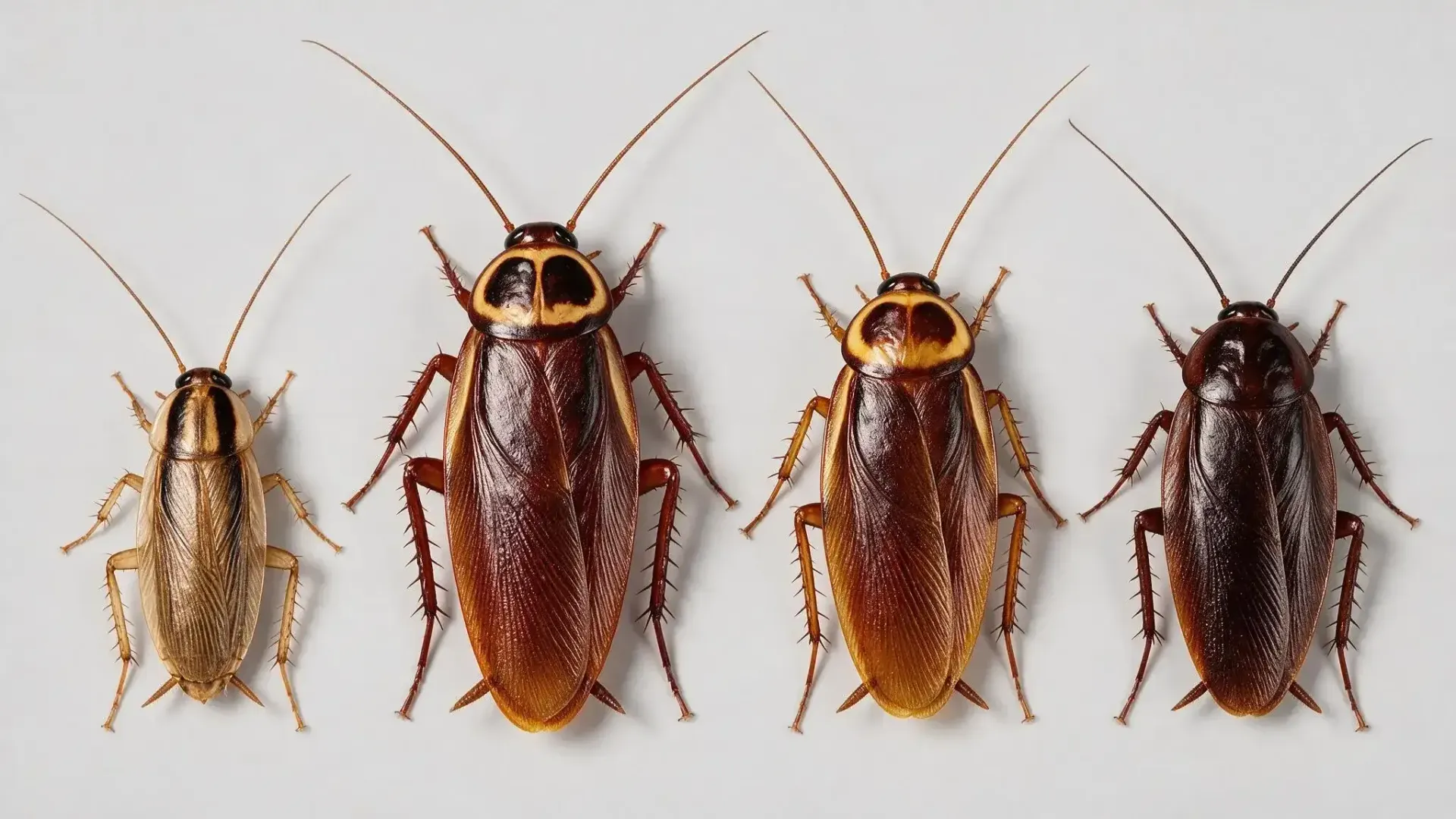
What you actually need to worry about is small, pale brown, about fifteen millimetres, with two dark stripes behind the head, and living permanently in your kitchen. That's a German cockroach, and it's an entirely different problem
Knowing which one you have
| Species | Size and look | Where it lives | Severity |
|---|---|---|---|
| German cockroach | 10 to 15mm, tan, two dark stripes | Indoors permanently, kitchens and bathrooms | Serious. Breeds indoors, resistant to many sprays. |
| American cockroach | 30 to 40mm, reddish brown | Drains, sewers, subfloors, roof voids | Moderate. Comes in from outside. |
| Australian cockroach | 30 to 35mm, yellow wing margins | Gardens, mulch, subfloors | Low. Outdoor species that wanders in. |
| Smokybrown cockroach | 30 to 35mm, uniform dark brown | Roof voids, trees, guttering | Moderate. Common in tropical roof spaces. |
If you're seeing small pale roaches during the day, that's significant. German cockroaches are nocturnal, and daytime activity generally means the harbourage is overcrowded, which means the population is large.
Why the tropics make it worse
Cockroaches need warmth, moisture and food, and Townsville supplies the first two continuously. There's no winter to knock populations back, and the wet season drives outdoor species indoors en masse.
German cockroaches complete a generation in as little as six weeks in warm conditions, and a single egg case holds around 30 to 40 nymphs. That maths is why a small problem becomes a large one over one summer.
Cockroaches and Allergies
Cockroaches don't just carry disease — they're a leading trigger for asthma and allergy flare-ups, especially in children. Along with dust mites and rodents, cockroaches produce allergens that can set off asthma attacks, and studies show cockroach allergy affects as much as 40% of the population, most commonly among city dwellers.
The allergens come from the cockroach itself — droppings, saliva, shed skin and other body parts all contain allergen proteins that trigger reactions and can make asthma symptoms worse. On top of that, cockroaches carry almost 33 kinds of bacteria (including E. coli and Salmonella), six types of parasitic worms, and more than seven other pathogens. They pick these up crawling through decaying matter, then spread them onto benchtops, food and other surfaces around the home.
If a family member's allergy or asthma symptoms seem to flare up more at home, cockroaches could be part of the problem — and it's a strong reason to get on top of an infestation early rather than wait it out.
Tips to Prevent Cockroach Infestations
- Seal cracks and holes around the outside of the home, including where utility pipes enter
- Properly ventilate basements and crawl spaces to prevent moisture build-up
- Keep counters free of crumbs and vacuum floors regularly to cut down on allergen build-up
- Keep garbage in a sealed container and dispose of it regularly so it doesn't attract pests
- Pay extra attention to kitchens and bathrooms — especially under appliances and sinks — as these are the areas cockroaches are drawn to most
Prevention helps, but a genuine infestation needs a professional response. JJM Pest Management's technicians target entry points and nesting sites for a lasting result — safely for your home, family and pets.
Why we bait rather than spray
Insecticide resistance in German cockroaches is well documented, and repeated use of the same supermarket sprays has selected for populations that shrug them off. See German cockroaches and insecticide resistance for the detail.
Worse, spraying scatters an infestation. Cockroaches exposed to a repellent product disperse away from it, which spreads a kitchen problem into the adjoining rooms and into wall cavities.
Gel baiting works differently. Small precise beads are placed directly into harbourage: hinge recesses, kickboard voids, behind and under appliances, along cupboard runners and in cavity edges. Cockroaches feed, return to harbourage and the active ingredient transfers through the population via droppings, vomit and cannibalism. It reaches the ones you'll never see.
We combine it with an insect growth regulator, which stops nymphs reaching breeding age, and with residual treatment to entry points and external harbourage.
What we treat in a typical home
Under and behind the sink. The refrigerator motor housing and the cavity behind it. Dishwasher and microwave housings. Kickboard voids. Cupboard hinges and runners. The pantry. Behind the stove. Bathroom vanities and the cavity around plumbing penetrations. The laundry. Roof void access points and eaves. External drains, meter boxes and the perimeter.
The pattern is consistent: warm, dark, close to water. Our guide to how to get rid of cockroaches in a tropical home covers what you can do between visits.
What we need from you
Clear access to under sink cupboards and behind appliances where possible. Don't spray anything in the week before, because a repellent residue in the treatment zone will keep cockroaches away from the bait. And don't wipe away the gel afterwards, which happens more often than you'd think.
Timing and follow up
Expect a marked reduction within a week and substantial control within two to three. German cockroach jobs typically need a follow up at two to four weeks to deal with the generation that hatched after the initial treatment.
For food premises, cockroach management is an ongoing programme rather than a single treatment. See commercial pest control for food premises.
Call 07 4774 3316, or see our full range of pest control services if cockroaches are not the only problem.
Frequently asked questions
Why do I see cockroaches during the day?
Daytime activity in a nocturnal species usually means the harbourage is overcrowded and cockroaches are being forced out to find space. It is a strong indicator of a large population rather than a minor one.
Will one treatment be enough?
For occasional outdoor species entering the home, usually yes. For an established German cockroach infestation, expect a follow up at two to four weeks to deal with newly hatched nymphs, since egg cases are protected from most treatments.
Are cockroach gel baits safe around children and pets?
Yes, when placed properly. Gel is applied in small beads into crevices, hinge recesses and voids that children and pets cannot reach, rather than broadcast across surfaces. We will point out where it has been placed before we leave.
Do I need to empty my kitchen cupboards?
Not entirely. Clearing access to under sink areas and moving items away from cupboard hinges and back corners helps considerably. We will tell you what to prepare when you book.
Why did supermarket spray stop working?
Insecticide resistance in German cockroaches is well documented, particularly to the pyrethroids used in most retail products. Repeated exposure selects for resistant populations. Gel baiting with a different mode of action is the standard professional response.
Why JJM Pest Management Services
- Expert technicians with training above and beyond the required standard
- Locally owned and operated
- 100% safe for your home, your family and your pets
- Over 20 years worth of industry leading experience
- Effective services delivered with no mess or disturbance and at a convenient time to you
- Professionals who are employees