White Ants in Townsville: What You Are Actually Dealing With

If you've searched for white ant treatment in Townsville, you've come to the right page and asked slightly the wrong question. There's no such insect as a white ant. There never has been. What you're dealing with is termites, and the name matters because it sends people to the wrong shelf at the hardware store. For the short version, see white ants versus termites, explained.

Where the name came from and why it persists

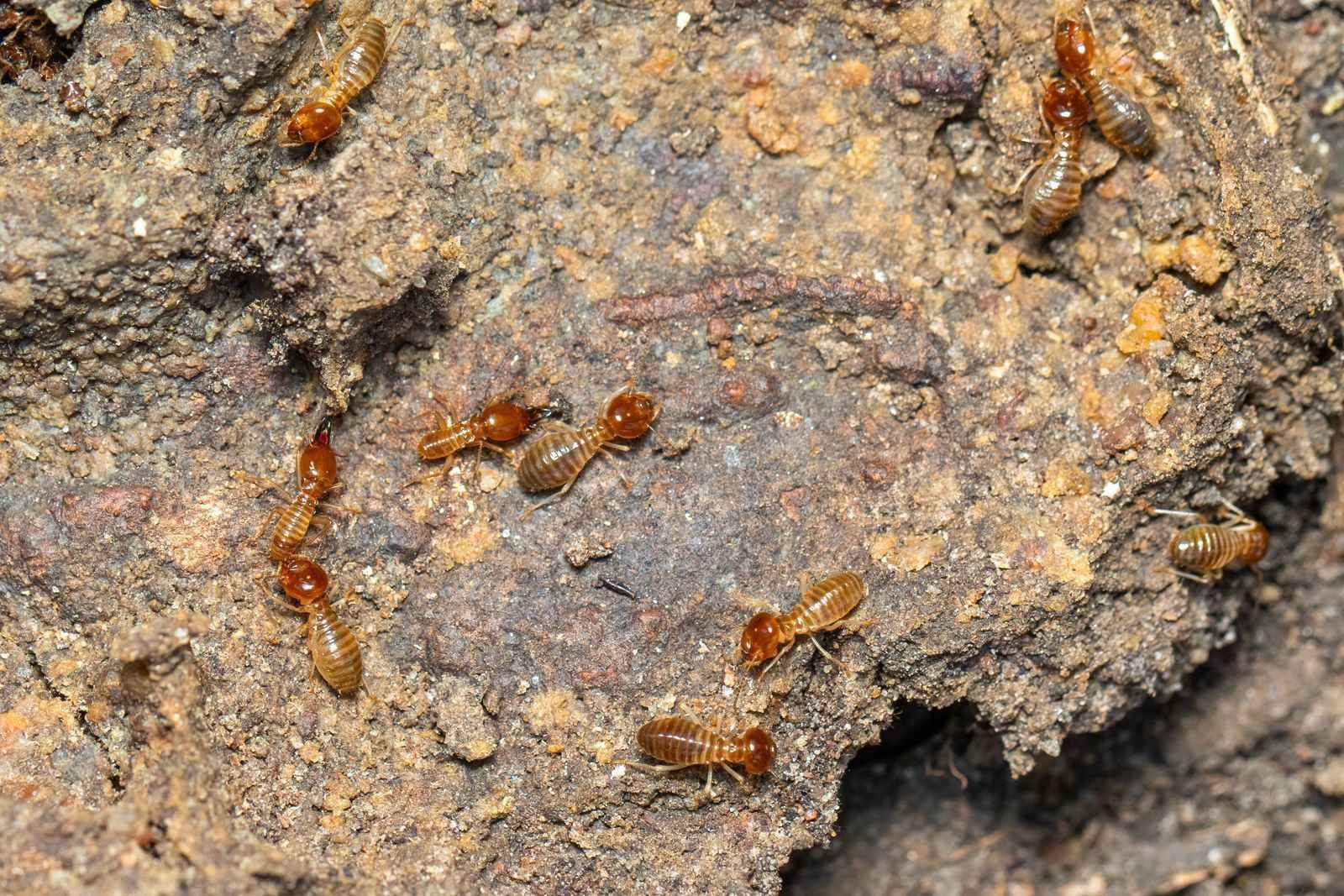
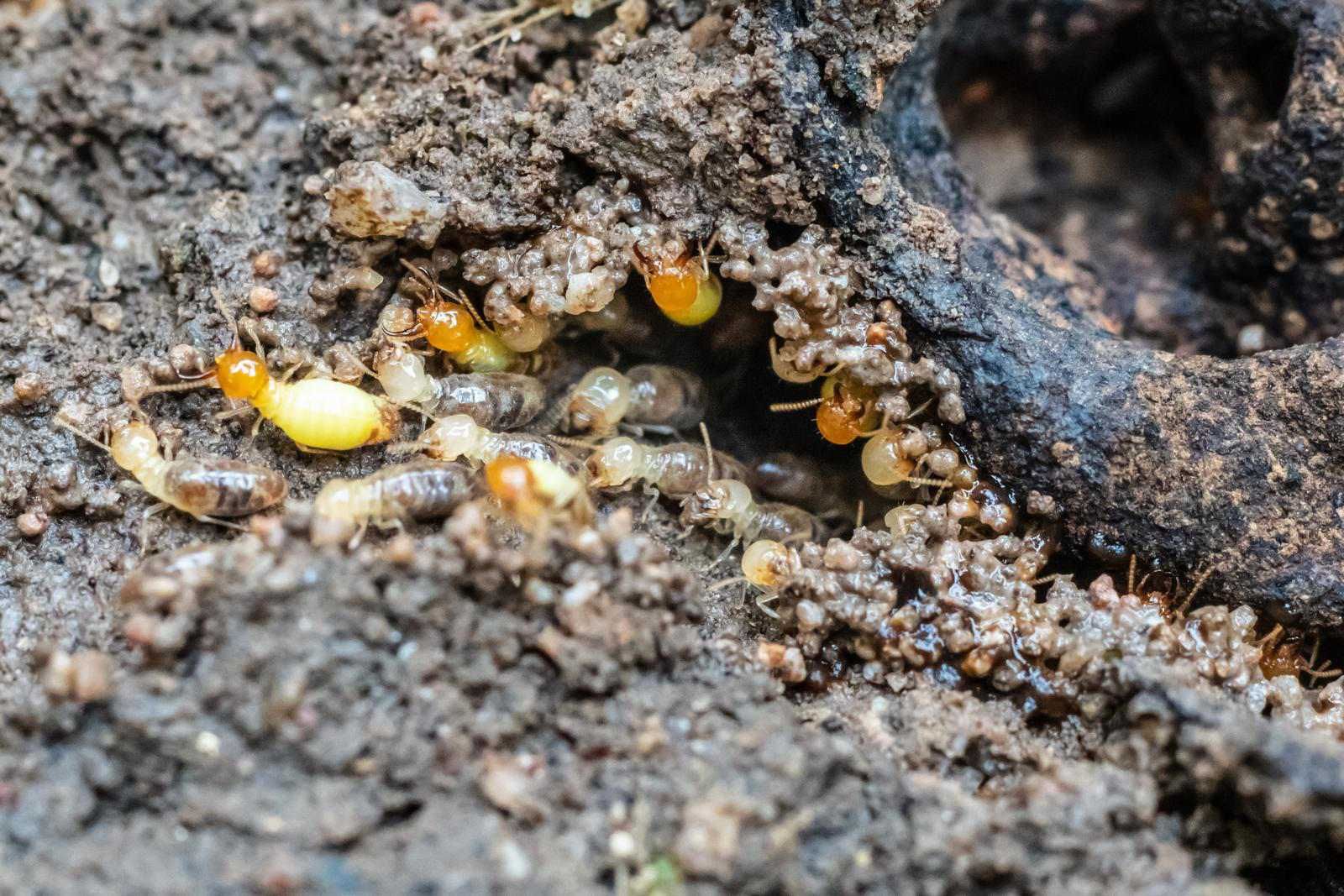
Early European settlers found pale, soft bodied social insects living in large colonies and doing broadly ant-like things. They called them white ants. It's an entirely reasonable description of what you see when you split open an infested piece of timber.

The name stuck because Australians are attached to it. Builders use it. Real estate agents use it. Your grandfather used it. Entomology moved on some time ago and settled on termites, but the colloquialism outlived the science, as colloquialisms do.

Why they aren't ants, and why that costs people money

Ants belong to the order Hymenoptera, alongside bees and wasps. Termites belong to Blattodea, which makes them close relatives of cockroaches. They're not distant cousins. They're on a different branch entirely.

The practical consequence is that ant products do nothing. Ant baits are formulated around ant foraging behaviour, which is scent trails to an exposed food source, and around the sugars and proteins ants metabolise. Termites are blind, travel inside enclosed mud galleries and eat cellulose. The bait sits on the bench and the colony carries on eating the wall.

Feature Feature White ant (termite) Actual ant
Related to Cockroaches Bees and wasps
Waist Straight and broad Narrow and pinched
Antennae Straight, beaded Elbowed
Colour Pale cream, almost translucent Usually dark brown or black
Eyes on workers None, they are blind Present
Diet Cellulose: timber, paper, cardboard Sugars, proteins, other insects
Behaviour when exposed Retreat immediately from light Scatter, regroup and defend
Termatrac device for detection

JJM Pest Management now have a Termatrac device, used to detect movement behind walls etc and an infrared device.
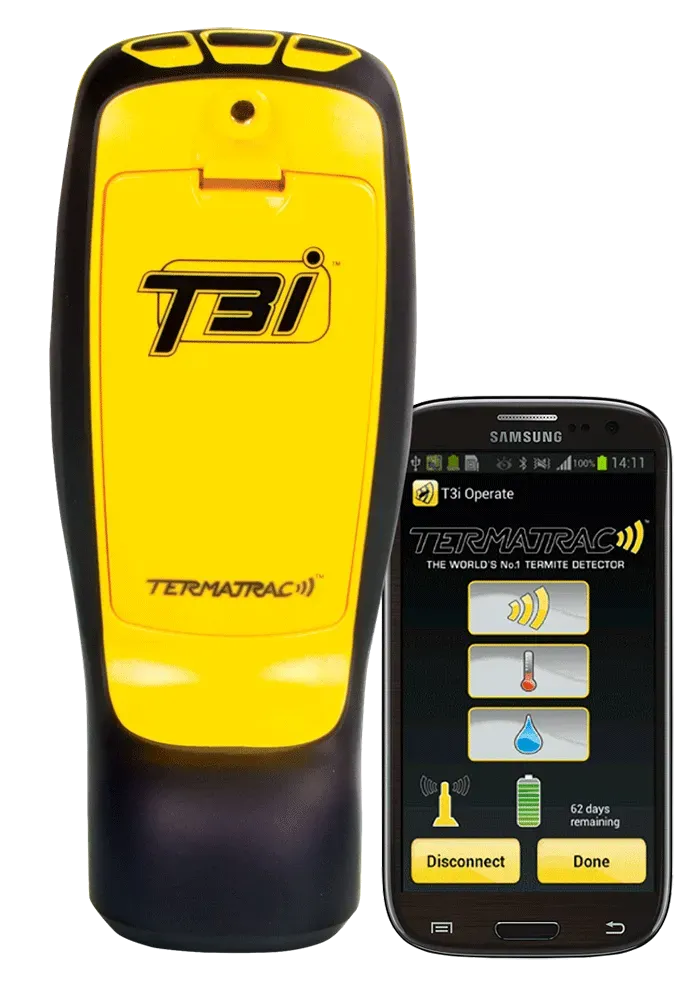
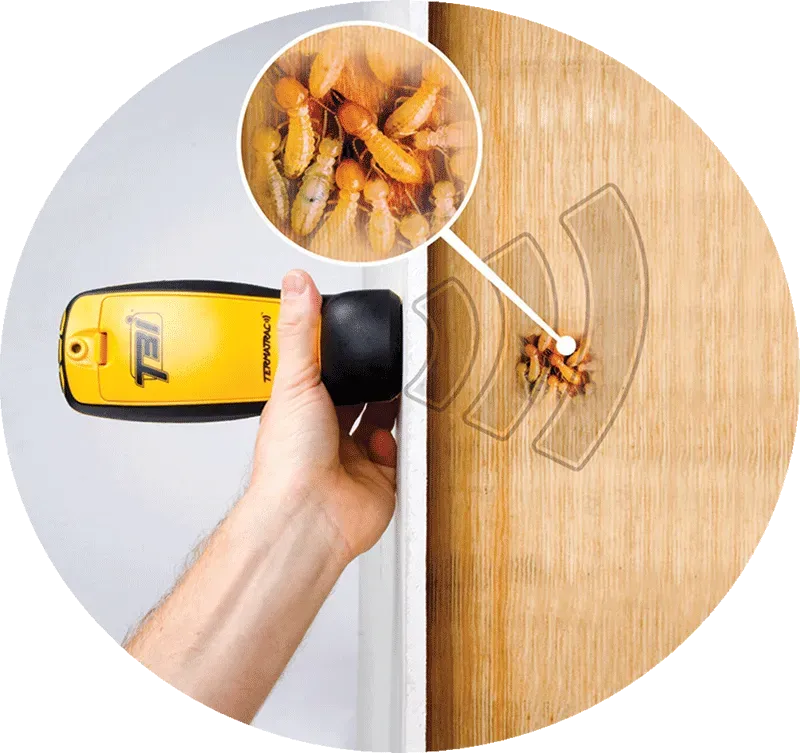
Termatrac device used to detect movement
Termatrac - infrared device

The white ants that matter in North Queensland

Australia has around 350 termite species and roughly thirty damage buildings. In Queensland about ten subterranean species attack timber, and two of them dominate the risk picture here.

Coptotermes acinaciformis is the most economically important and widespread species in the state. It doesn't require soil contact provided it has steady moisture, which means colonies can establish in wall cavities, roof voids and tree stumps as readily as underground.

Mastotermes darwiniensis, the giant northern termite, is the most destructive species in Australia in terms of the speed and extent of damage. Workers reach around 12 millimetres against 7 for other pest species, colonies can number in the millions, and it will consume leather, rubber, plastic sheathed cable and bitumen alongside your structural timber. Homes under sustained attack can be all but destroyed in around six months.

Schedorhinotermes is also common through the tropics and attacks structural timber at an intensity that at times approaches Coptotermes.


Signs you have white ants

The evidence is the same regardless of what you call them.

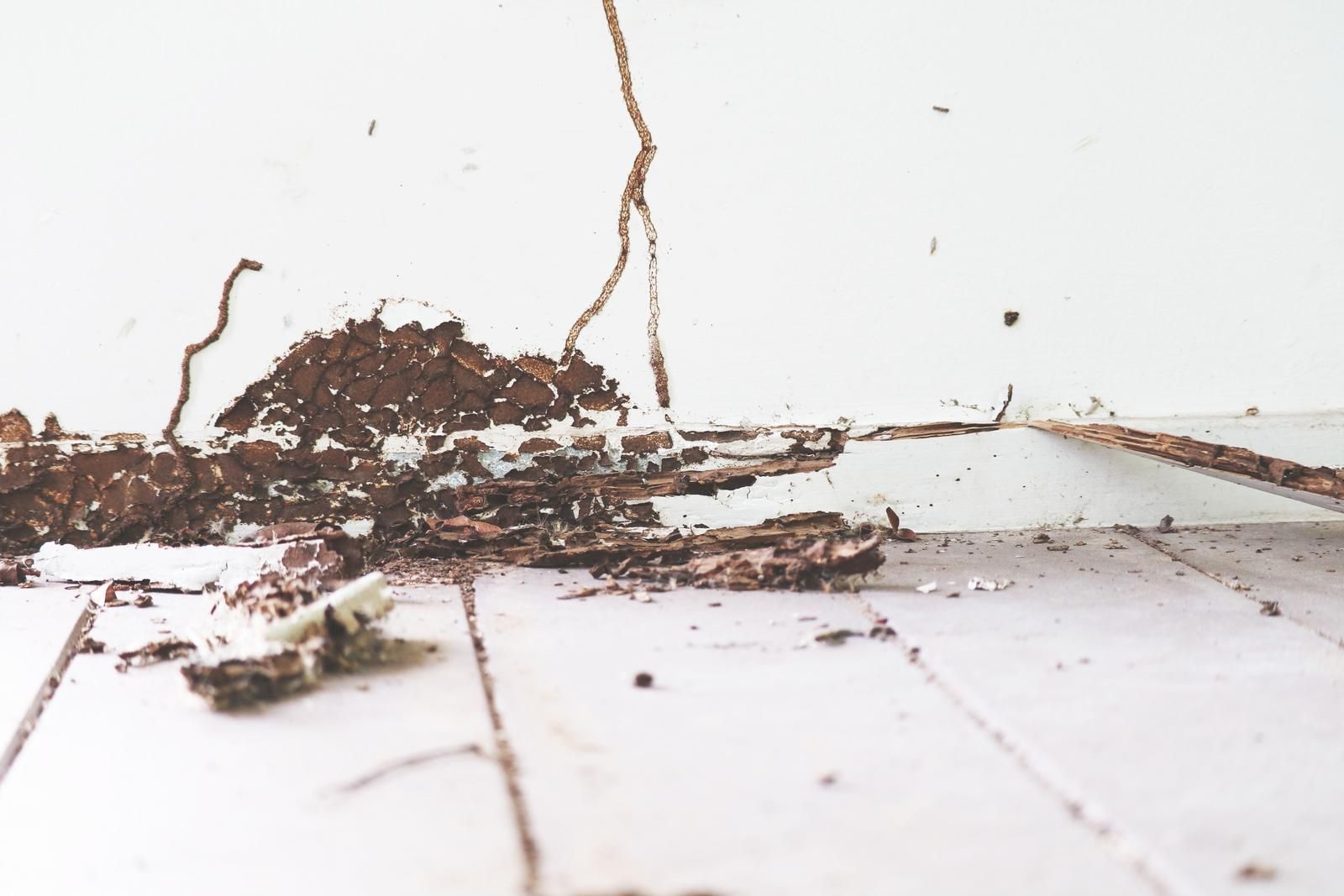
  • Mud tubes running up stumps, piers, foundation walls or the inside of cupboards.
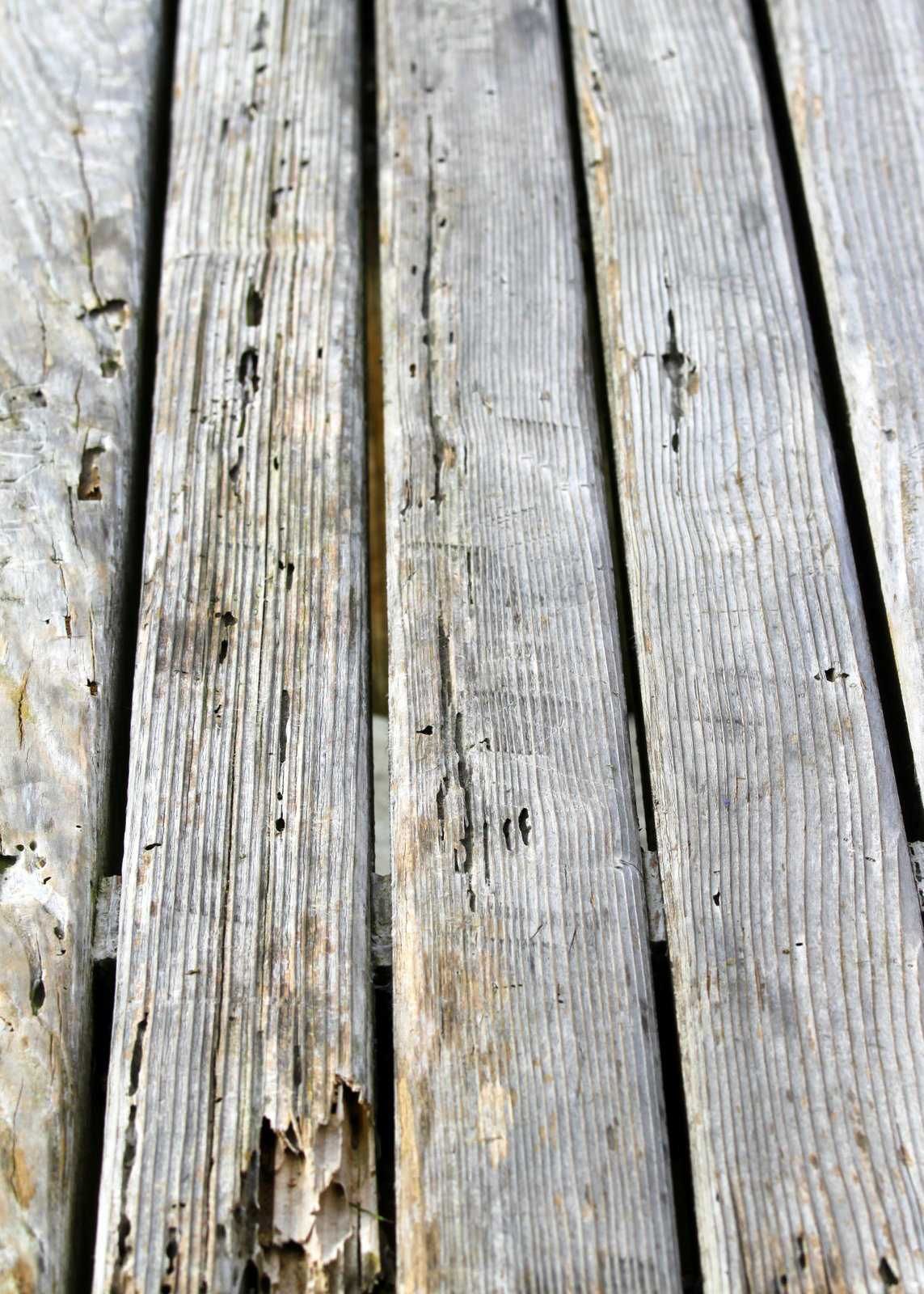
  • Timber that sounds hollow or papery when you tap it with a screwdriver handle.
  • Paint that blisters, ripples or bubbles on internal walls with no plumbing above it.
  • Small piles of discarded translucent wings on windowsills and in light fittings.
  • Doors and windows that start sticking outside the wet season.
  • Damaged fence posts, garden sleepers or stumps at the back of the property.


Our full checklist of the nine signs of termites in a Townsville home goes through each one and what it indicates about the stage you're at.


What DIY products actually achieve

Very little, and sometimes less than nothing. Hardware and supermarket surface sprays are repellent by design, which is precisely the opposite of what termite control requires. They kill the termites in front of you and teach the colony that route is compromised, so it reroutes, usually somewhere concealed.

Chemical termite treatment requires a licensed pest management technician in every Australian state and territory. That's not industry protectionism. The non repellent products that actually work are not sold to the public, and applying them properly requires knowing where the colony is.


What proper white ant treatment involves

Identification first, always. The species determines the approach. Then one or more of baiting, which uses cellulose stations and an insect growth regulator carried back to the nest, dusting directly into active workings, or non repellent chemical soil treatment.

All three work by transfer rather than contact kill, which is why they take weeks and why they eliminate colonies rather than relocating them. See termite treatment that reaches the nest for the detail.

Then a barrier and an inspection schedule, because eliminating one colony does nothing about the next one.


If you've found white ants

Don't break open the mud tubes. Don't spray them. Photograph what you've found, leave it intact and book a termite inspection or call 07 4774 3316. Active workings are a treatment access point, and a contaminated one is no longer useful to us.

Frequently asked questions

Are white ants and termites the same thing?

Yes, entirely. White ant is an Australian colloquial name for termites. There is no separate insect. Termites are not ants at all and are more closely related to cockroaches.

Will ant spray or ant bait kill white ants?

No. Ant products target ant biology and ant foraging behaviour. Termites are blind, feed on cellulose and travel inside enclosed mud galleries, so ant baits are ignored entirely and repellent sprays simply push them to enter elsewhere.

Can white ants eat through concrete or brick?

No. They cannot consume concrete, brick or steel. What they do is exploit cracks, expansion joints and service penetrations to travel through them, which is why brick and steel framed homes remain at risk. The internal timbers, frames, skirtings and roof battens are still edible.

How do white ants get into a house?

Usually from soil, through timber in contact with the ground, through cracks and joints in a slab, around service penetrations, or by building mud tubes up piers and foundation walls. Garden beds and mulch built up against external walls are a common entry route.

How much does white ant treatment cost in Townsville?

It depends on the species, the size of the building and the treatment method. A full chemical barrier for an average home generally runs $2,500 to $3,600, while baiting systems cost $1,500 to $3,500 to install plus annual monitoring. An inspection comes first, because a quote without one is a guess.


Why JJM Pest Management Services

  • Expert technicians that are each trained beyond that of the industry standard
  • A business that always has and always will be locally owned and operated 20 years of industry experience
  • Professionals who are JJM Pest Management Employees and all local
  • Efficient termite treatment that leaves no mess, no harmful toxins and no disturbance
  • A team who are specials in dealing with termite infestations
  • A Termite treatment service that fits around your home and work schedule