Termite Barriers for Townsville Homes

There's a persistent myth about termite barriers that's worth dismantling before anything else. A barrier is not a force field. It does not repel termites and it does not create an impenetrable wall around your house. Anyone selling you that idea is selling you a disappointment.

What a barrier actually does is far more interesting, and considerably more effective.

How a modern barrier really works

There are two mechanisms, and they're almost opposites for renovations.

A physical barrier is stainless steel mesh, installed so the aperture is smaller than a termite can pass through. It doesn't kill anything. It simply forces a colony trying to enter the building to construct a visible mud tube around the outside of it, where an inspection will find it. It converts a hidden problem into an obvious one. The most popular installation is the chemically impregnated plastic sheeting or paint on products eg Termseal & Biofilm. These products either force the termite out or kill them when they try to chew through it.

A chemical barrier uses a non-repellent termiticide applied to soil around and under the building. Termites walk through the treated zone without detecting anything unusual, pick up the active ingredient, carry it back to the nest and transfer it through the colony by grooming and food sharing. The colony is eliminated by its own social behaviour.


Products we use:

Chemical barriers on an existing home

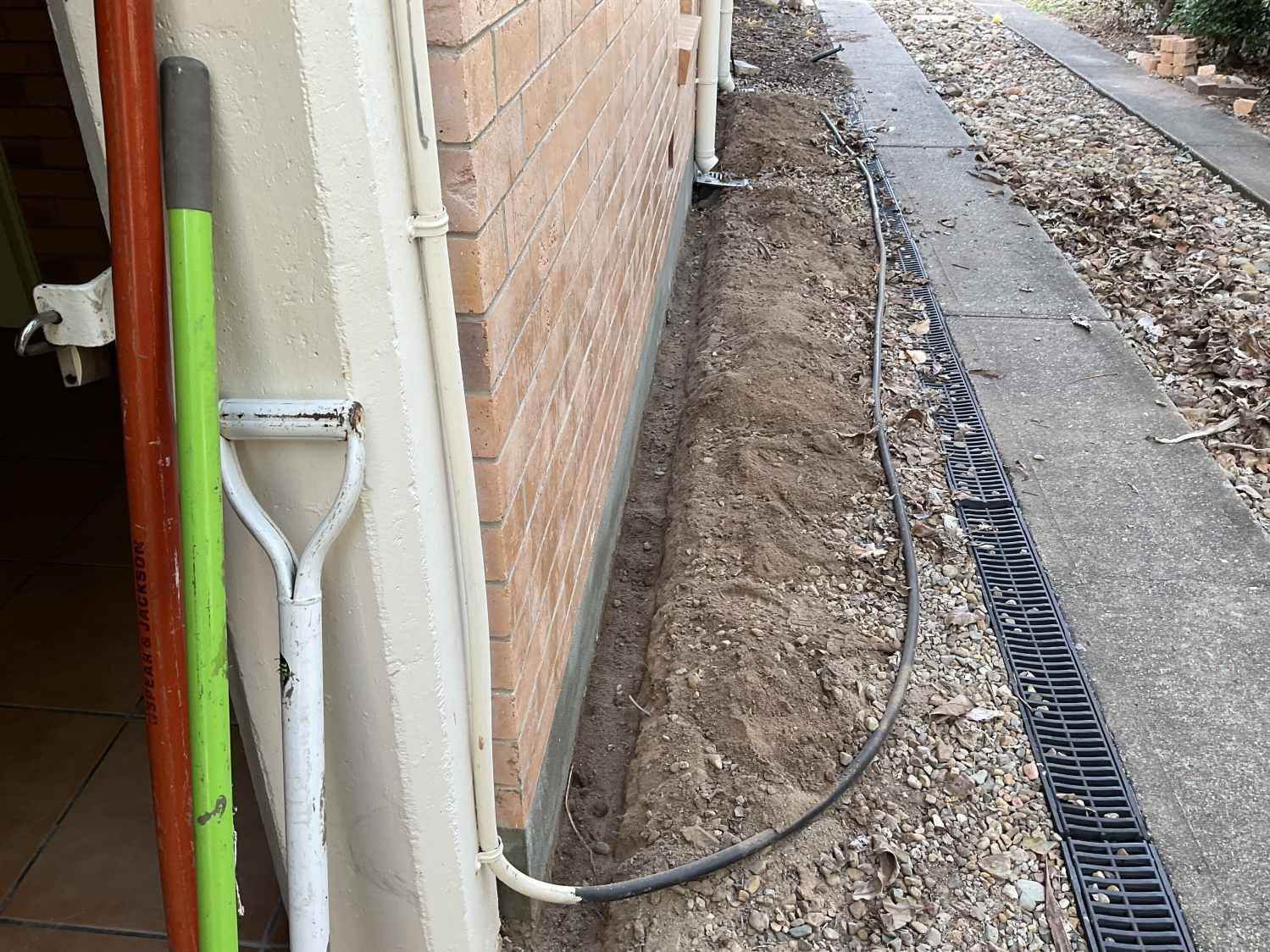
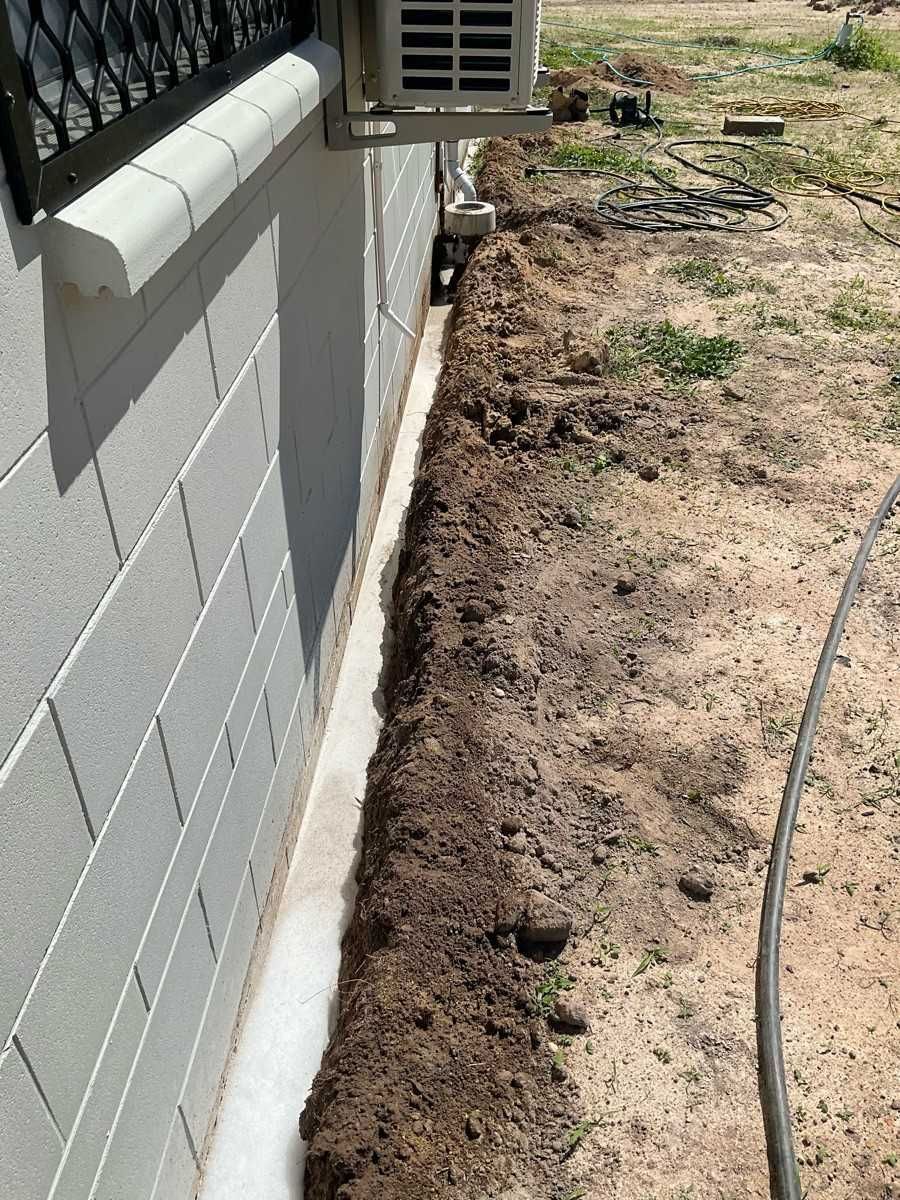
Retrofitting a chemical barrier to a completed house means creating a continuous treated soil zone around the entire perimeter. Where there's garden or lawn, that's a trench. Where there's concrete path, driveway, patio or paving, it means drilling at regular intervals, injecting through the holes and patching them.

Which is why the amount of hard surface around your house matters more to the quote than the size of the house. A Kirwan slab home ringed by lawn is a straightforward day. The same home with a concrete apron on three sides and a paved entertaining area is considerably longer.

Expect a full chemical barrier for an average Townsville home to sit between $2000 and $6000 in 2026, with fipronil based systems at the upper end and carrying longer expected service life. See what a termite barrier costs in Townsville for the full breakdown against baiting and reticulation.

Physical barriers, and why timing decides everything

Physical barriers can be either nonchemical or chemical in a non-soil matrix and last the structural life of the building. They're also close to impossible to retrofit, because they need to be installed at slab and penetration stage before anything is built on top.

If you're building in Rassmussen, Elliot Springs, the Cosgrove Estate, Mount Low or Burdell, this is a conversation to have with your builder now. Installed at slab stage, a physical barrier costs a fraction of what a retrofit chemical barrier will cost you in eight years. Our pre-construction termite protection page covers what AS 3660.1 requires.

If renewing a barrier without re-trenching appeals, see termite reticulation systems and refills, which is often the cheaper option over a twenty-year horizon.


Comparing your options

System Upfront cost Service life Renewal
Chemical barrier, bifenthrin $1500 to $4000 3 to 5 years Full re-treatment
Chemical barrier, fipronil $2000 to $6000 5 to 8 years Full re-treatment
Reticulation system Higher upfront Indefinite with refills Pump through existing lines
Physical barrier, new build only Low at slab stage Structural life None required
Baiting system $1,500 to $3,500 Ongoing while monitored $800 to $1500 per year

What can bridge a barrier, and usually does

This is the part nobody mentions at quote time. A barrier protects a specific line around your building, and that line can be defeated by ordinary landscaping.

      Garden beds built up above the treated zone or above the slab edge, giving termites a soil bridge straight over the barrier.

      New concrete poured over the treated soil after installation, sealing an untreated path underneath.

      Mulch piled against the wall, which holds moisture and provides a covered route.

      Timber sleepers, planter boxes or decking built hard against the building.

      Air conditioning slabs, hot water systems and rainwater tanks installed after the barrier, creating an unprotected penetration.

If you're landscaping or renovating after a barrier goes in, tell your pest controller before the work starts, not after. Reinstating a bridged barrier is far cheaper than dealing with what came through it.

Warranties, and what they actually cover

A barrier warranty is a document with conditions, and the conditions are usually where people come unstuck. Almost every warranty requires annual inspection to remain valid. Most exclude damage where the barrier has been bridged by landscaping or building work. Most require that the property is maintained in the condition it was in at installation.

We document what was installed, which product, at what rate, on what date, and what the warranty requires of you. It goes on a durable notice in the meter box as AS 3660.1 requires for new construction, and in your paperwork either way.

Is a barrier worth it in Townsville?

More here than almost anywhere in the country. CSIRO hazard mapping puts the tropical north in the highest risk band, activity runs year round because there's no winter, and the species present include Mastotermes darwiniensis, which is capable of severely damaging a house in around six months.

Against that, a barrier is a one off cost in the low thousands with a service life measured in years, protecting an asset where structural repairs routinely exceed $100,000 and no insurer contributes anything.

For a quote based on an actual look at your property, book a termite inspection or call 07 4774 3316.

Frequently asked questions

How long does a termite barrier last in Townsville?

Bifenthrin based chemical barriers typically last five to eight years and fipronil based systems eight to ten. Townsville's high wet season rainfall leaches termiticide from soil faster than drier climates, so treat those as planning figures and let the annual inspection confirm the actual condition.

Can a barrier be installed if I already have termites?

The active infestation is treated first. See termite treatment if you already have activity. Installing a barrier around a building that already has a colony inside it protects the termites from re-entry rather than protecting the house. Treatment first, barrier second.

Will drilling my driveway and paths cause damage?

Holes are typically 6 to 12 millimetres, drilled at intervals, injected and then patched with mortar or plugs. On coloured or decorative concrete, the patches are visible on close inspection. We will point out where this applies before starting.

Do I still need inspections with a barrier installed?

Yes, and your warranty almost certainly requires it. Barriers deplete, they can be bridged by landscaping and paving, and physical barriers can be damaged. Annual inspection under AS 3660.2 is what verifies the system is still intact.

What is the difference between a barrier and a baiting system?

A barrier creates a protective zone around the building. A baiting system places feeding stations in the soil to intercept foraging termites and eliminate the colony. Barriers protect a specific line, baiting targets the colony wherever it is. Many properties benefit from both.


Why JJM Pest Management Services

  • JJM Pest Management technicians only use chemicals that are safe for children and animals. These chemicals are only available to licensed specialists and not the public
  • Our technicians are knowledgeable experts and are JJM Pest Management employees. We never use sub-contractors.
  • We will arrange an appointment that fits around your schedule
  • JJM Pest Management is a local company with over 20 years experience
  • Our reliable services are delivered by employee fully trained and local