What a Termite Barrier Costs in Townsville
A termite barrier is one of those purchases that feels enormous until you compare it to the alternative. Somewhere between two and four thousand dollars to protect a house, against structural repair bills that routinely start at five figures and are covered by exactly zero Australian home insurance policies.
Still, it's real money, and the quotes vary wildly. Here's what a termite barrier cost actually consists of in Townsville, and what you're paying for at each end of the range
First, what a barrier actually does
Common misconception worth clearing up. A termite barrier does not repel termites and does not create an impenetrable wall. Modern systems work in one of two ways: either they physically force termites into the open where an inspection will find them, or they use a non repellent chemical that termites walk through undetected, pick up and carry back to the colony.
The second approach is why modern chemical barriers work so much better than the ones installed thirty years ago. Older repellent products created an avoidance zone, and termites simply found the gap. Non repellent actives like fipronil and imidacloprid don't announce themselves, so termites keep using the route and keep transferring the product through the colony.
Chemical barriers: how they work and what they cost
A chemical barrier means a continuous treated soil zone around and under the building. For an existing home this involves trenching the perimeter, drilling through concrete paths, patios and slab edges, and injecting termiticide to form an unbroken treated band.
| Item | Typical 2026 cost | Notes |
|---|---|---|
| Full chemical barrier, average home | $2,900 to $3,600 | Perimeter trench and drill, retrofit to existing dwelling |
| Entry level chemical barrier | From around $2,500 | Smaller or simpler properties, fewer hard surfaces |
| Pre construction soil treatment | $200 to $2,500 | Applied at slab stage, dramatically cheaper than retrofit |
| Baiting system installation | $1,500 to $3,500 | Plus ongoing monitoring |
| Baiting system annual monitoring | $250 to $360 per year | Required for the system to function |
What pushes a chemical barrier quote up is hard surfaces. Every metre of concrete path, driveway, patio or paving that abuts the house has to be drilled at regular intervals, injected and patched. A home ringed by lawn and garden bed is a straightforward job. The same home with a concrete apron on three sides is a considerably longer one.
Product choice matters too. Fipronil based systems such as Termidor generally carry longer expected service life and stronger warranty terms than bifenthrin based products like Biflex, and they're priced accordingly.
Physical barriers: how they work and what they cost
Physical barriers are stainless steel mesh, graded stone particle systems or moulded collars installed at construction stage. They contain no chemical at all. They simply present a gap too small for a termite to pass through, forcing any colony trying to enter to build a visible tube around the outside.
The economics are entirely different. Installed during construction, a physical barrier is comparatively cheap and lasts the structural life of the building. Retrofitted to a completed house, it's usually impossible without significant demolition, which is why almost nobody does it.
If you're building in the Elliot Springs, Cosgrove Estate or Mount Low corridors, this is the conversation to have with your builder now rather than in five years. Our pre-construction termite protection page covers what's required under AS 3660.1.
Reticulation systems
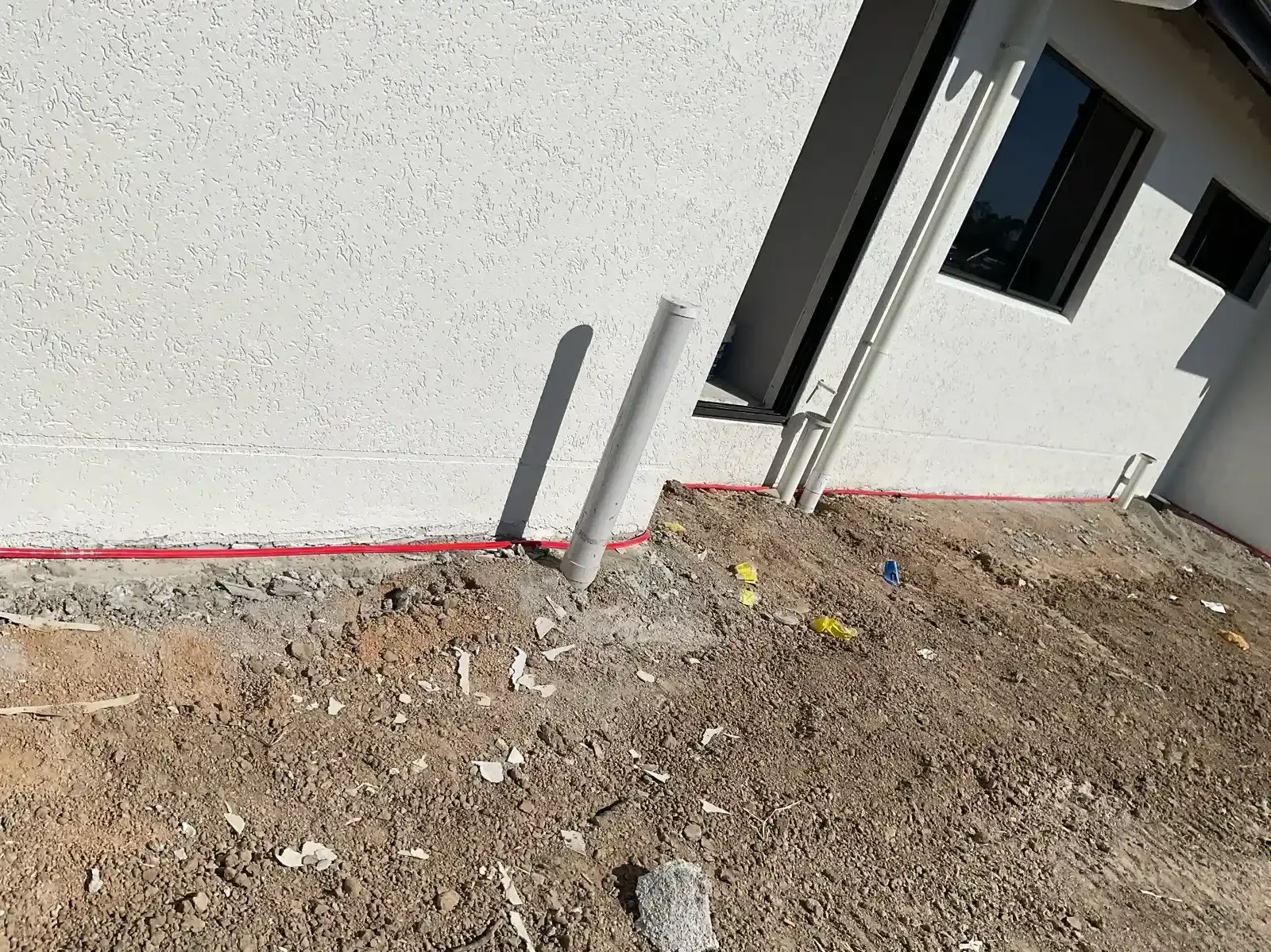
A reticulation system is a chemical barrier with plumbing. Perforated tubing is laid in the soil around the building at construction stage, with refill points at accessible locations, allowing the chemical zone to be replenished by pumping rather than re trenching. See termite reticulation systems and refills for the full detail.
The install cost sits above a plain chemical barrier, and there's an ongoing refill cost every few years. What you buy is the ability to renew the barrier without tearing up the garden and drilling the driveway again, which over a twenty year horizon usually comes out ahead
Comparing the options
| System | Upfront cost | Expected service life | Ongoing cost |
|---|---|---|---|
| Chemical barrier (bifenthrin) | $2,500 to $3,200 | 5 to 8 years | Full re treatment at end of life |
| Chemical barrier (fipronil) | $2,900 to $3,600 | 8 to 10 years | Full re treatment at end of life |
| Reticulation system | Higher upfront | Indefinite with refills | Refill every few years |
| Physical barrier (new build only) | Low if installed at slab stage | Structural life | None, but inspections still required |
| Baiting system | $1,500 to $3,500 | Ongoing while monitored | $250 to $360 per year |
What changes your quote
Perimeter length rather than floor area, because you're treating the outside edge. The proportion of that perimeter that's hard surface. Soil type and drainage. Whether there's an existing barrier to assess or remove. Access under the house. Site slope and retaining walls. And whether there's currently active termite activity, which usually needs treating before a barrier goes in.
One thing that should not change your quote is urgency. If somebody quotes you a barrier over the phone without inspecting, that number is a guess, and guesses in this trade are always low at quote time and high at invoice time.
Is a barrier worth it in Townsville?
Yes, more here than almost anywhere. Queensland and the tropical north carry the highest termite pressure in the country. The climate means activity continues year round rather than slowing in winter. And the species involved include Mastotermes darwiniensis, which can do catastrophic damage to a house in around six months.
Set the numbers side by side. A barrier is a one off cost in the low thousands with a service life measured in years. Structural repairs after an undetected infestation routinely exceed $100,000, and your insurer will not contribute a cent.
One caveat worth stating plainly. A barrier does not replace inspections. It manages risk, it depletes over time, and it can be bridged by a garden bed built up against the wall or a new path poured over the treated zone. Annual inspection is what verifies it's still working, and most warranties require it.
For termite barriers installed in Townsville, call JJM Pest Management on 07 4774 3316, or read what a termite inspection costs first if you want to start there.
Frequently asked questions
How much does a termite barrier cost in Townsville?
For an average home in 2026, a full chemical barrier generally runs between $2,500 and $3,600 depending on the product and the amount of hard surface to drill. Baiting systems cost $1,500 to $3,500 to install plus $250 to $360 a year in monitoring.
How long does a chemical termite barrier last?
Typically five to eight years for bifenthrin based products and eight to ten years for fipronil based systems. Soil type, drainage, rainfall and disturbance all affect the actual figure, which is one reason annual inspections matter.
Can a termite barrier be installed on an existing house?
Chemical barriers and reticulation systems can be retrofitted to existing homes. Physical barriers generally cannot, because they need to be installed at slab and penetration stage before the building goes up.
Do I still need inspections if I have a barrier?
Yes, and most warranties require it. Barriers manage risk rather than eliminating it, they deplete over time, and they can be bridged by landscaping or new paving. Annual inspection is how you confirm the barrier is still intact and effective.
What is the cheapest way to protect a new build?
Pre construction treatment, by a wide margin. Soil treatment or a physical barrier installed at slab stage costs a fraction of retrofitting the same protection later, and it is required under AS 3660.1 for new construction.